
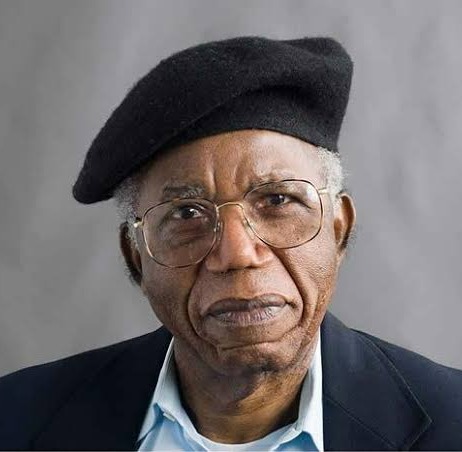

In remembrance of
Chinu Achebe
1930 – 2013
In loving memory of
Chinu Achebe
SUNRISE
Sunday, 16 November 1930
SUNSET
Thursday, 21 March 2013
SUNRISE
Sunday, 16 November 1930
SUNSET
Thursday, 21 March 2013
When Chinua Achebe passed away on March 21, 2013, at the age of 82, the global literary community paused to honor a monumental figure. Obituaries from major international publications and tributes from fellow icons painted a portrait of a writer who didn't just tell stories, but fundamentally reordered the world's literary landscape.
Here are the central themes and tributes that defined his obituary:
"The Man Who Found Africa's Voice"
Global retrospectives focused heavily on how Achebe's debut, Things Fall Apart, served as a massive cultural correction. The New York Times highlighted his lifelong mission to reclaim the narrative of the continent from Western writers like Joseph Conrad, whom Achebe famously exposed as a "thoroughgoing racist" for reducing Africa to a mere backdrop for European psychological dramas.
"You know that it's going to be a battle to turn it around, to say to people, 'That's not the way my people respond in this situation, by unintelligible grunts... they would speak.' And it is that speech that I knew I wanted to be written down."
— Chinua Achebe, quoted in retrospectives
Tributes from Global Icons
The most poignant reflections came from those who lived through similar struggles for freedom:
Nelson Mandela: In a powerful tribute echoed across many obituaries, Mandela recalled reading Achebe during his 27-year imprisonment on Robben Island, stating: "There was a writer named Chinua Achebe in whose company the prison walls fell."
Nadine Gordimer: The South African Nobel laureate praised Achebe's rare literary balance, calling him "a novelist who makes you laugh and then catch your breath in horror — a writer who has no illusions but is not disillusioned."
A Fearless Critic of Power
Obituaries noted that Achebe’s sharp pen was not reserved solely for colonial history. As Nigeria transitioned into independence, his work evolved into a fierce, unflinching critique of post-colonial corruption, military dictatorships, and the failures of African leadership.
His 1966 novel A Man of the People was so prophetic about Nigeria's impending military coups that it nearly got him arrested.
Later in life, he twice refused Nigeria's high national honor (the Commander of the Federal Republic) in 2004 and 2011, stating that he could not accept awards while the political leadership kept the nation in a state of chaos and lawlessness.
The Exile and Late Years
Many retrospectives detailed the physical and political trials of his later life. The devastation of the Nigeria-Biafra civil war (1967–1970) deeply traumatized Achebe, leading to a long period of literary silence regarding novels. In 1990, a devastating car accident in Nigeria left him paralyzed from the waist down, prompting his move to the United States for medical treatment and safety.
He spent his final two decades teaching—first at Bard College and later at Brown University—inspiring generations of students with his characteristic warmth, lucidity, and quiet dignity before passing away following a brief illness in Boston.